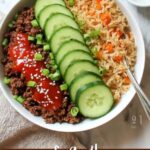
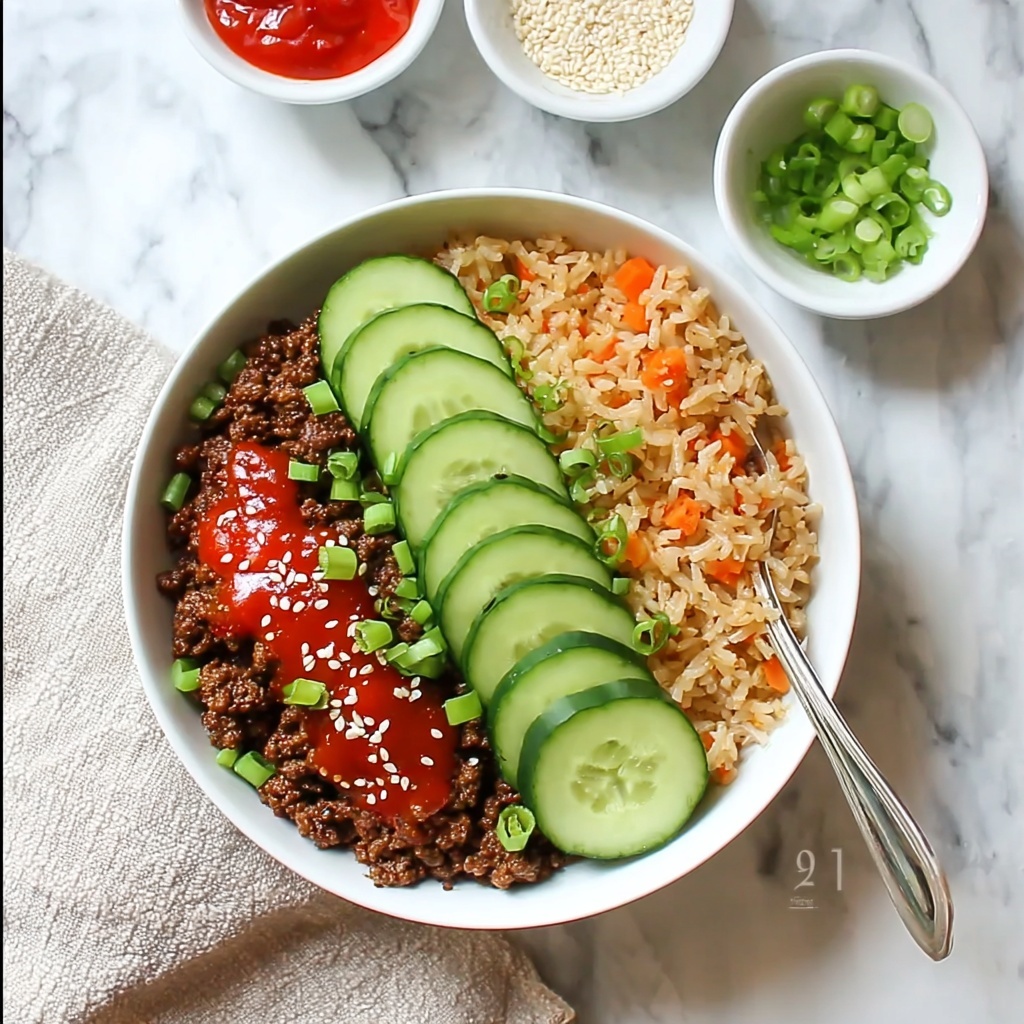
If you are craving a dinner that bursts with vibrant flavors yet comes together in just 30 minutes, this Korean Beef Bowl Recipe is an absolute winner. Combining tender ground beef with a perfectly balanced sauce, fresh cucumbers, and a kick of Gochujang sauce atop hearty brown rice, it’s the kind of dish that feels like a warm hug after a busy day. Easy to prepare and packed with savory, sweet, and spicy notes, this Korean Beef Bowl Recipe has quickly become one of my go-to meals for its comforting taste and simple assembly.
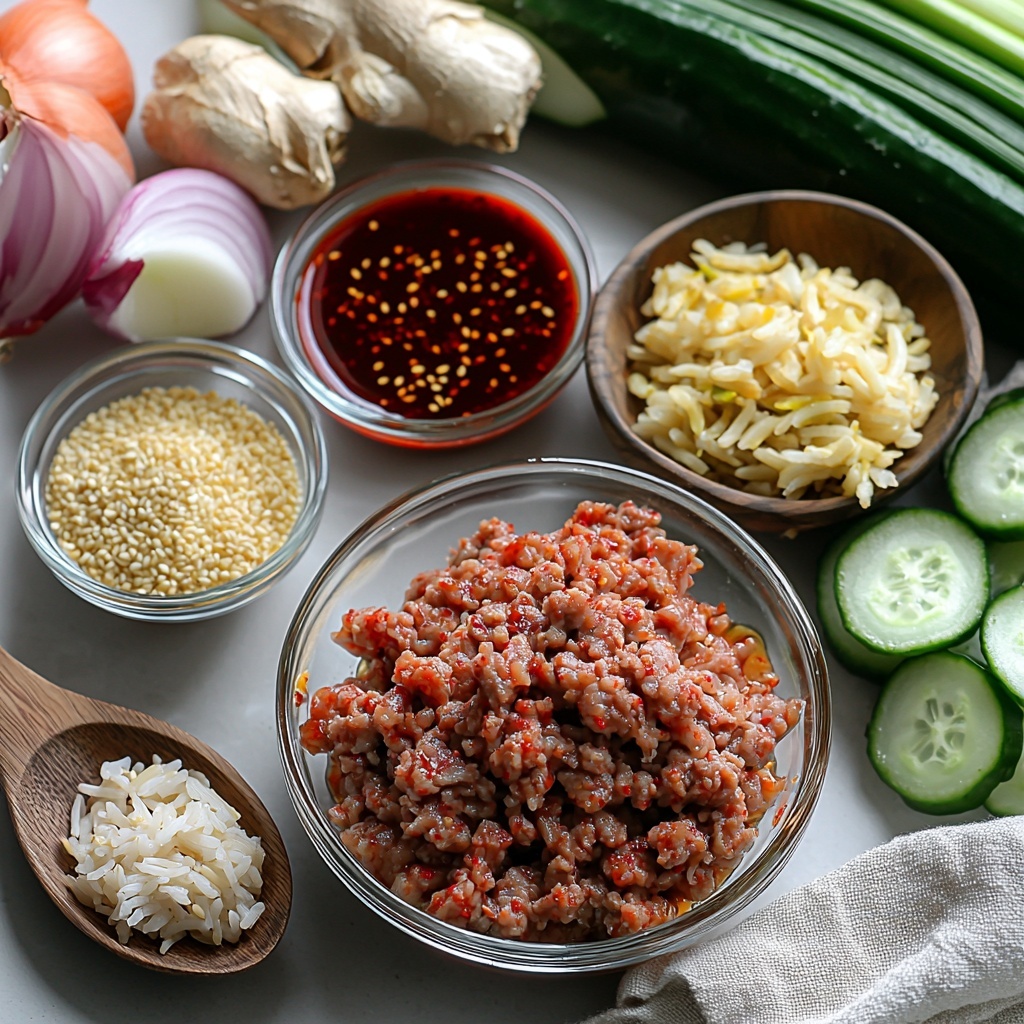
Ingredients You’ll Need
Don’t let the simplicity of these ingredients fool you—each one plays a crucial role in creating the magical harmony that makes this Korean Beef Bowl Recipe so irresistible. From the salty depth of soy sauce to the zesty punch of ginger, every item contributes to the vibrant flavor profile, while the texture and color make the dish just as satisfying to eat as it is to look at.
- 1/4 cup low sodium soy sauce: Provides a savory and salty base without overwhelming the dish.
- 2 teaspoons light brown sugar: Adds subtle sweetness that balances the soy sauce perfectly.
- 1 teaspoon sesame oil: Infuses a distinctive nutty aroma that is quintessential in Korean cooking.
- 1/2 teaspoon crushed red pepper flakes: Delivers a gentle heat to enliven the beef.
- 2 tablespoons water: Helps to blend the sauce ingredients evenly and prevents it from being too thick.
- 1 pound 93% lean ground beef: The star protein that is both tender and flavorful when cooked just right.
- 1/4 cup chopped yellow onion: Adds sweetness and a slight crunch once sautéed.
- 2 garlic cloves (crushed): Boosts the savory complexity with its pungent bite.
- 1 teaspoon fresh grated ginger: Brings a fresh, spicy zest that wakes up the palate.
- 3 cups cooked brown rice: A wholesome, nutty base that keeps this meal hearty and filling.
- 1 small sliced cucumber (skin on): Provides a cool, crisp contrast to the saucy beef.
- 2 tablespoons Gochujang Sauce (or more if desired): Adds that signature Korean spicy-sweet depth that keeps this dish exciting.
- 1/2 tablespoon sesame seeds: A final touch of nutty crunch and visual appeal.
- 2 sliced scallions (white and green parts): Fresh, mild onion flavor to brighten every bite.
How to Make Korean Beef Bowl Recipe
Step 1: Prepare the Sauce
Start by mixing your low sodium soy sauce, water, light brown sugar, sesame oil, and crushed red pepper flakes in a small bowl. Stir until everything is well combined. This sauce forms the heart of your Korean Beef Bowl Recipe, ensuring each bite bursts with perfectly balanced savory, sweet, and spicy notes.
Step 2: Cook the Beef
Heat up a large, deep nonstick skillet over high heat and spray it lightly with cooking oil to prevent sticking. Add the ground beef, breaking it apart with a wooden spoon so it cooks evenly. Allow it to brown fully, cooking off all the pink for about 5 minutes. The browning step is key because it builds delicious flavor through caramelization that elevates the entire dish.
Step 3: Add Aromatics
Next, stir in the chopped yellow onion, crushed garlic cloves, and freshly grated ginger. Cook everything together for about a minute until the aromas bloom and the onion softens just slightly. This step infuses the beef with fragrant layers that are essential for authentic Korean-inspired flavor.
Step 4: Simmer with Sauce
Pour the prepared sauce over the beef and aromatics mixture. Give it a good stir so every bit is coated. Then cover your skillet and reduce the heat to low. Let the mixture simmer gently for 10 minutes, allowing the flavors to meld beautifully. This simmering step deepens the taste and gives the sauce a luscious, sticky consistency that clings to every morsel.
Step 5: Assemble the Bowl
To serve, spoon about 3/4 cup of cooked brown rice into each bowl. Top it generously with approximately 2/3 cup of the savory beef mixture. Add the sliced cucumber on the side for a refreshing crunch, drizzle with Gochujang sauce to your preferred heat level, then finish with a sprinkle of sesame seeds and the vibrant scallion slices. Voilà—your Korean Beef Bowl Recipe is ready to delight your taste buds!
How to Serve Korean Beef Bowl Recipe
Garnishes
Simple garnishes like toasted sesame seeds and fresh scallions do more than just decorate; they add layers of texture and brightness to the dish. The sesame seeds give a gentle crunch and nutty flavor, while scallions lend a fresh, slightly sharp bite that complements the rich beef beautifully.
Side Dishes
While this bowl is a complete meal, pairing it with quick Korean-inspired sides such as kimchi or steamed vegetables takes the experience up a notch. The spicy fermented tang of kimchi perfectly balances the savory-sweet beef, and simple steamed greens lighten the meal with fresh vibrancy.
Creative Ways to Present
If you want to impress guests or treat yourself, present this Korean Beef Bowl in colorful ceramic bowls to showcase the contrast of colors—the rich brown beef, the green cucumbers, the bright red Gochujang, and white sesame seeds. Adding a soft-boiled egg on top with a runny yolk can turn it into a luxurious feast that’s as beautiful as it is delicious.
Make Ahead and Storage
Storing Leftovers
You can easily store leftover Korean Beef Bowl in an airtight container in the refrigerator for 3 to 4 days. Keep the rice separate from the beef mixture if possible to prevent the rice from becoming soggy. When refrigerated properly, it maintains its flavors and texture beautifully, making it a perfect next-day lunch or dinner option.
Freezing
This recipe also freezes well. Portion the beef mixture into freezer-safe containers or bags, leaving out the rice and fresh toppings. Freeze for up to 2 months. When ready to eat, thaw overnight in the fridge before reheating to preserve the quality of the beef and sauce.
Reheating
Reheat the beef mixture gently on the stove over medium-low heat, stirring occasionally to warm it through evenly. Heat the rice separately in the microwave or on the stovetop. Add fresh cucumber slices, garnish, and a drizzle of Gochujang sauce after reheating to keep the flavors bright and fresh.
FAQs
Can I use a different type of meat for this Korean Beef Bowl Recipe?
Absolutely! While ground beef works perfectly here, you can swap it for ground turkey, chicken, or even finely chopped pork to suit your preferences or dietary needs. Just adjust cooking times accordingly.
Is this Korean Beef Bowl Recipe spicy?
The spice level is mild to moderate thanks to the crushed red pepper flakes and Gochujang sauce, but you can always add more Gochujang or extra red pepper flakes to kick up the heat to your liking.
Can I use white rice instead of brown rice?
Yes, white rice is a fine substitute if you prefer its softer texture and quicker cooking time. Brown rice just adds extra nuttiness and fiber.
How long does it take to prepare and cook this dish?
The entire Korean Beef Bowl Recipe comes together in about 30 minutes, making it a fantastic option for busy weeknights when you want something delicious but fast.
Is this recipe gluten-free?
To make this gluten-free, just be sure to use gluten-free soy sauce and check the Gochujang brand ingredients. Other than that, all ingredients are naturally gluten-free.
Final Thoughts
This Korean Beef Bowl Recipe is truly one of those comforting dishes that you’ll find yourself craving again and again. It’s quick to make, packed with flavor, and flexible enough to become a family favorite or your easiest weeknight savior. So why not give it a try tonight? I promise this bowl full of bold, balanced taste will brighten your dinner table and satisfy your appetite every time.
Print
Korean Beef Bowl Recipe
- Prep Time: 10 minutes
- Cook Time: 20 minutes
- Total Time: 30 minutes
- Yield: 4 servings
- Category: Main Course
- Method: Stovetop
- Cuisine: Korean
Description
This Korean Beef Bowl recipe is a quick and flavorful dish that combines savory ground beef cooked with ginger, garlic, and a tangy soy-based sauce, served over nutritious brown rice with refreshing cucumber slices and a spicy Gochujang sauce drizzle. Perfect for a satisfying weeknight meal, it delivers a delicious balance of sweet, spicy, and umami flavors in just 30 minutes.
Ingredients
Sauce Ingredients
- 1/4 cup low sodium soy sauce
- 2 teaspoons light brown sugar
- 1 teaspoon sesame oil
- 1/2 teaspoon crushed red pepper flakes
- 2 tablespoons water
Beef Mixture
- 1 pound 93% lean ground beef
- 1/4 cup chopped yellow onion
- 2 garlic cloves, crushed
- 1 teaspoon fresh grated ginger
To Serve
- 3 cups cooked brown rice
- 1 small cucumber, sliced (skin on)
- 2 tablespoons Gochujang sauce (adjust to taste)
- 1/2 tablespoon sesame seeds
- 2 sliced scallions (white and green parts)
Instructions
- Prepare the sauce: In a small bowl, combine the low sodium soy sauce, 2 tablespoons of water, light brown sugar, sesame oil, and crushed red pepper flakes. Stir well to mix all ingredients thoroughly and set aside.
- Cook the beef: Heat a large, deep nonstick skillet over high heat and spray it lightly with cooking oil. Add the ground beef, breaking it up with a wooden spoon. Cook the beef until it is fully browned and no longer pink, about 5 minutes.
- Add aromatics: Mix in the chopped yellow onion, crushed garlic cloves, and freshly grated ginger into the skillet with the beef. Cook the mixture together for 1 minute, until the garlic is fragrant and the onions begin to soften.
- Simmer with sauce: Pour the prepared sauce over the cooked beef mixture. Stir to combine everything evenly, then cover the skillet and reduce the heat to low. Let it simmer gently for 10 minutes, allowing the flavors to meld beautifully.
- Assemble the bowl: Spoon about 3/4 cup of cooked brown rice into each serving bowl. Top with approximately 2/3 cup of the saucy beef mixture. Add sliced cucumber on the side, drizzle with Gochujang sauce according to your preferred spice level, and finish by sprinkling sesame seeds and sliced scallions on top.
Notes
- Use lean ground beef to keep the dish lighter and reduce excess fat.
- Adjust the amount of crushed red pepper flakes and Gochujang sauce to control the spice level.
- Brown rice can be substituted with white rice or cauliflower rice for a lower-carb option.
- For a gluten-free version, substitute soy sauce with tamari or a gluten-free soy sauce alternative.
- Leftovers can be stored in the refrigerator for up to 3 days and reheated gently on the stovetop or microwave.